
VLAAMS INSTITUUT VOOR DE ZEE
PLATFORM VOOR MARIEN ONDERZOEK

Class@Desert has the goal to bring multidisciplinary geosciences to the classrooms; provide scientific understanding of the different aspects of the role that life plays in geological processes; invoke a scientific communication between scientists and pupils; and give insight in scientific expeditions.
Class@Desert builds upon the previous Class@Oceans action during which marine sciences were experienced by following a real-life expedition on the high seas aboard the research vessel R/V Belgica. One of the actions during this expedition was to examine under-water sceneries of living coral mounds (small hills built by corals and other benthic organisms) by the use of a Remotely Operated Vehicle (ROV) 'Cherokee'.
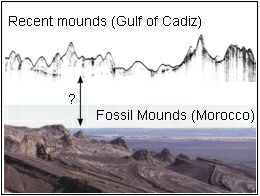 |
Class@Desert now adds the fossil dimension to this experience by going back in time millions of years. Around the world, very old structures are found that resemble the coral mounds. By studying these, scientists try to find out whether the organisms and processes that are responsible for building these structures in the present and past are similar; they want to know how life evolved and how the building process (origin, life and death of a mound) took place. More information can be found by reading the background information. |
Class@Desert will take you deep into Morocco, at the edge of the Sahara desert, where the world-famous Early Devonian (400 million year old) Kess-Kess Mounds are found. You can follow this expedition on this website.
A daily report from the expedition will be available. Images and movies will be made available depending on internet availability on-site.
The Class@Desert project is an organisation of:
with the support and/or in the framework of:
 |
 |
 |
 |
 |
 |
 |
 |
 |
 |
 |
 |