One step closer to the implementation of the new law on underwater heritage
On November 22nd 2013 the draft of the new law on the protection of underwater cultural heritage, an adapted and extended version of the so called “wreck law” from 2007, was approved by the federal government. This law will provide protection for all maritime and cultural heritage located in the Belgian part of the North Sea. Minister Johan Vande Lanotte announced this at a press conference in Ostend on 26th November 2013.
Concretely this means that the cultural heritage in the exclusive economic zone and the continental shelf (the zone beyond the territorial waters), that has been underwater for more than 100 years, will be protected. Thereby, Belgium adheres to the UNESCO treaty concerning the protection of underwater cultural heritage. This treaty was recently ratified by Belgium on 5th August 2013.
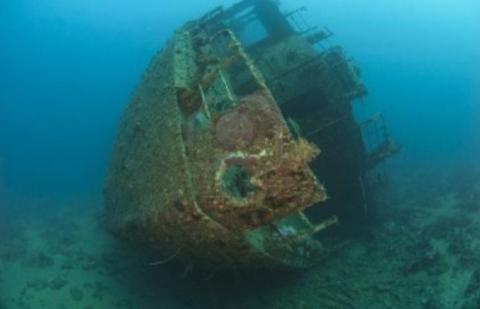
In the territorial sea (the first twelve sea miles), where Belgium enjoys complete sovereignty, the new law goes one step further than internationally required. Here the underwater heritage less than 100 years old will also be protected. The idea behind this was to protect the large number of ships and submarines that sank during the First and Second World War. So far, a total of around 300 shipwrecks have been inventoried among which 10 German submarines from WW-1.
The new law that was adopted in consultation with the cabinet of Minister Bourgeois nominated the governor of West Flanders as the “receiver” of the underwater cultural heritage. The receiver acts not only as a ‘hotline’ to report findings but is also required to register them and provide the minister of the North Sea with advice concerning whether the finding can be considered as underwater cultural heritage. From now on also authorization will be required to work on underwater cultural heritage.
More information concerning the new law and the role the SeArch project plays in this can be found on this website (www.sea-arch.be/nl/content/wrakkenwet).