2007, April 26-29: Exploring Escarpment Mud Mound Systems and Mud Volcanoes, Murten, Switzerland
ESF Programme: Workshops on Marine Research Drilling (Magellan Workshop Series)
Exploring Escarpment Mud Mound Systems and Mud Volcanoes with new European strategies for sustainable mid-depth coring
Murten, Switzerland, 26-29 April 2007
 A fundamental and unanswered question facing Earth and life scientists today is, what is the relation between hydrosphere, geosphere and biosphere?
The geological setting of Mound Systems and Mud Volcanoes provides a unique natural laboratory for studying and understanding the exciting and constructive interplay between carbonates, geofluids, biodiversity and deep biosphere and to investigate whether there is a causal link between mud volcanoes and mud mounds formation.
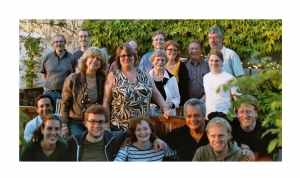
The Magellan Workshop sponsored by the European Science Foundation and entitled “Exploring Escarpment Mud Mound Systems and Mud Volcanoes with new European strategies for sustainable mid-depth coring” was held in Murten, Switzerland, 26-29 April, 2007. The workshop gathered 19 scientists and members of
-
two large IODP Proposals: 689 (Mud volcanoes as a window into the deep biosphere) and 673 (Atlantic Mound Drilling 2: Morocco Margin),
-
of two ongoing ESF EUROCORES projects (MiCROSYSTEMS and CARBONATE) and
-
of the EU-FP6 Integrated Project HERMES.
These scientists, representing a wide spectrum of disciplines e.g., geophysics, sedimentology, paleoceanography, geomicrobiology joined with the aim to discuss the best strategies to study these two important geological settings.
The workshop had been designed to merge:
-
discussion on innovating technology, which addresses the new challenges of site surveying and coring in sensitive areas of shallow exploratory drilling and of lander deployments, with
-
multidisciplinary science, boosting the synergy between respectively a palaeoceanography research community and a Deep Biosphere cluster and
-
to present and discuss the capability of Europe’s most promising and innovative tool for ocean margin exploratory drilling: the Remotely Controlled Sea-Floor Drill Rig “MeBo” (Meeresboden-Bohrgerät) developed at the University of Bremen (MARUM) to address the target objectives, in absence of highly performing drilling tools as IODP drilling platforms.
Meeting participants
| 1. | Katja von Allmen | Organisation | University of Fribourg, Switzerland |
| 2. | Menchu Comas | CSIC and University of Granada, Spain | |
| 3. | Davy Depreiter | Renard Centre of Marine Geology, Gent University, Belgium | |
| 4. | Christian Dullo | Leibniz-Institute of Marine Sciences (IFM-GEOMAR), Germany | |
| 5. | Anneleen Foubert | Renard Centre of Marine Geology, Gent University, Belgium | |
| 6. | Tim Freudenthal | University of Bremen, MARUM, Germany | |
| 7. | Giordana Gennari | Organisation |
University of Fribourg, Switzerland |
| 8. | Dierk Hebbeln | University of Bremen, MARUM, Germany | |
| 9. | Jean-Pierre Henriet | Convenor | Renard Centre of Marine Geology, Gent University, Belgium |
| 10. | Kay Mangelsdorf | GeoForschungsZentrum (GFZ) Potsdam, Germany | |
| 11. | Stephan Margreth | Organisation | University of Fribourg, Switzerland |
| 12. | Judith A. McKenzie | ETH-Zürich, Switzerland | |
| 13. | Rory O'Donnel | University College Cork, Ireland | |
| 14. | Luis Menezes Pinheiro | Universidade de Aveiro, Portugal | |
| 15. | Hans Pirlet | Renard Centre of Marine Geology, Gent University, Belgium | |
| 16. | Andres Rüggeberg | Leibniz-Institute of Marine Sciences (IFM-GEOMAR), Germany | |
| 17. | Silvia Spezzaferri | Convenor | University of Fribourg, Switzerland |
| 18. | Mieke Thierens | University College Cork, Ireland | |
| 19. |
Crisogono Vasconcelos |
ETH-Zürich, Switzerland |