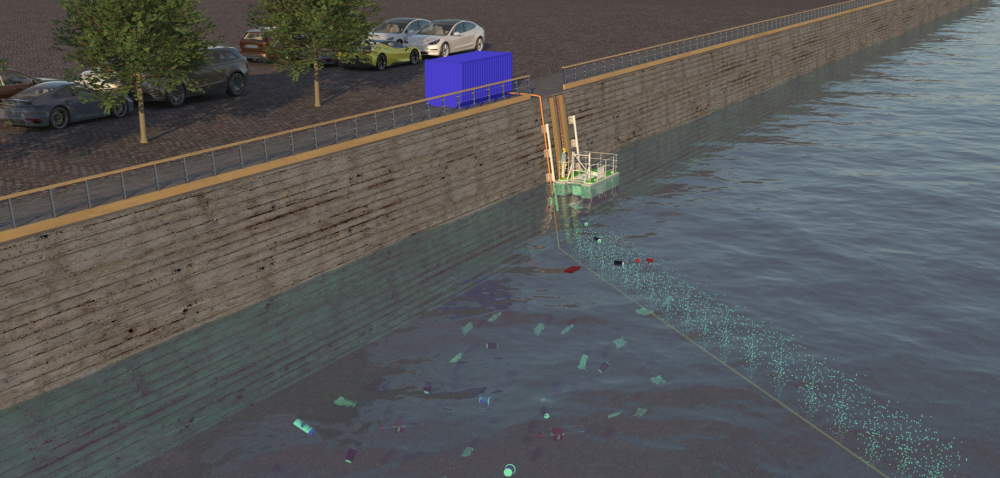
A curtain of air bubbles that intercepts plastic waste before it reaches the sea. That is the principle behind M.A.R.C., a new ‘Plastic Catcher’ currently being tested in the river IJzer in Nieuwpoort. On 23 October, you can see the system in action for yourself and meet the scientists and engineers behind it.
MULTI.engineering
Plastic carried along by rivers and canals can eventually end up in the sea. But how can you intercept this waste without blocking the entire waterway? M.A.R.C. uses air to do the job. A pipe installed on the riverbed releases small air bubbles into the water. As they rise, they create a current that guides floating and partially submerged waste towards a collection point, where the plastic can be gathered and removed.
Researchers in Nieuwpoort are now investigating how well this approach works under real-world conditions. Can the system intercept enough plastic in the waterway before it reaches the sea? And could the same technology eventually be deployed elsewhere to stop marine plastic pollution?
From detecting plastic to intercepting
The test is part of TREASURE, a European Interreg North Sea project. As part of the project, the Flanders Marine Institute (VLIZ) joined forces with the Flemish companies IMDC, Herbosch-Kiere and MULTI.engineering to establish a Living Lab in Nieuwpoort.
Over the past few years, they have investigated where plastic waste ends up in and around the river IJzer, where it accumulates and how it moves through the water system towards the North Sea. To do so, the researchers combined field measurements and computer modelling with workshops and citizen science activities, including Plastic Pirates.
Now, the research is taking the next step: the knowledge gained is being used to test a potential solution in practice.
Where does plastic accumulate?
The research revealed clear differences between beaches, harbours and riverbanks. Riverbanks in particular appear to be important areas where plastic waste accumulates.
The types of waste found also provide clues about where it comes from. Researchers discovered plastic fragments, crisp and sweet wrappers, pieces of polystyrene, cigarette filters and fragments of plastic rope originating from dolly rope used in fishing gear. Tourism, fisheries, waste collection and waste processing were among the sources identified for the litter found.
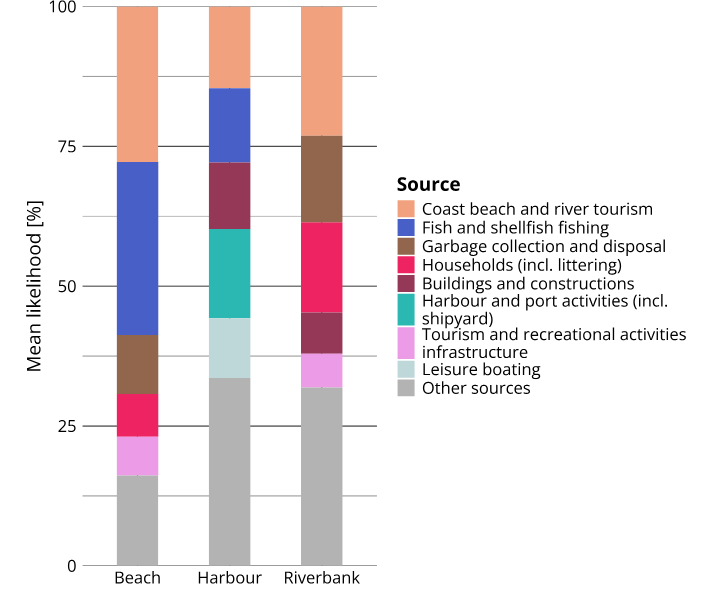
Average probability (%) of the five main sources contributing to litter at the three sampling locations in Nieuwpoort (beach, harbour and riverbank), averaged across all seasons. All remaining sources are grouped under ‘Other sources’. Credit: TREASURE project
Knowing both where plastic comes from and where it ends up makes it possible to take more targeted action. This can mean intercepting waste at strategic locations, as M.A.R.C. aims to do, but also preventing it from entering the water in the first place.
There is no single miracle solution to plastic pollution. Prevention, better waste collection, clean-up efforts and technological solutions all complement one another. Citizens, businesses and public authorities all have a role to play.
Come and see M.A.R.C. in action
Would you like to learn more about the findings and practical solutions developed by our scientists and engineers?
Join us on Friday 23 October at the demonstration site between the cycle bridge next to Langebrug and the fish market. At 11.00 and 15.10, you will be able to see the plastic catcher in action. In the meantime, you can meet the scientists and engineers involved in the project, discover how the bubble curtain works and ask all your questions about plastic pollution in the river IJzer.
The TREASURE project is supported by the Province of West Flanders and the City of Nieuwpoort, Kayakers for Nature, Proper Strand Lopers, Vlaamse Yachthaven Nieuwpoort and the Agency for Nature and Forests.
> Discover the story map on TREASURE and the Living Lab in Nieuwpoort