How can we track changes in ocean life more rapidly, accurately and on a larger scale? Biomolecular techniques offer increasing opportunities to address these questions. The latest Future Science Brief from the European Marine Board (EMB) sets out recommendations for scaling up the use of these techniques in marine monitoring, ocean conservation and policy. VLIZ researcher Pascal Hablützel is one of the co-authors of the publication, which was officially launched on 18 November 2026.
A new dimension in marine monitoring
A thorough understanding of marine biodiversity and ecosystem functioning is essential for the sustainable management and protection of the ocean. In a rapidly changing world, there is a growing need for detailed biological data. These data enable the early detection of changes in the marine environment, a better understanding of the underlying processes and a more accurate assessment of the impact of human activities.
Biomolecular techniques, including -omics techniques and environmental DNA (eDNA), offer considerable potential in this regard. Using genetic material that organisms leave behind in their environment (eDNA), researchers can, for example, detect the presence of species without having to observe or collect the organisms themselves. Omics techniques, in turn, provide insights into the genetic characteristics, gene activity and metabolism of organisms, among other aspects.
Combining these techniques with traditional observation methods creates so-called ‘augmented observatories’: enhanced observation systems that provide a more detailed picture of the biodiversity, functioning and dynamics of marine ecosystems.
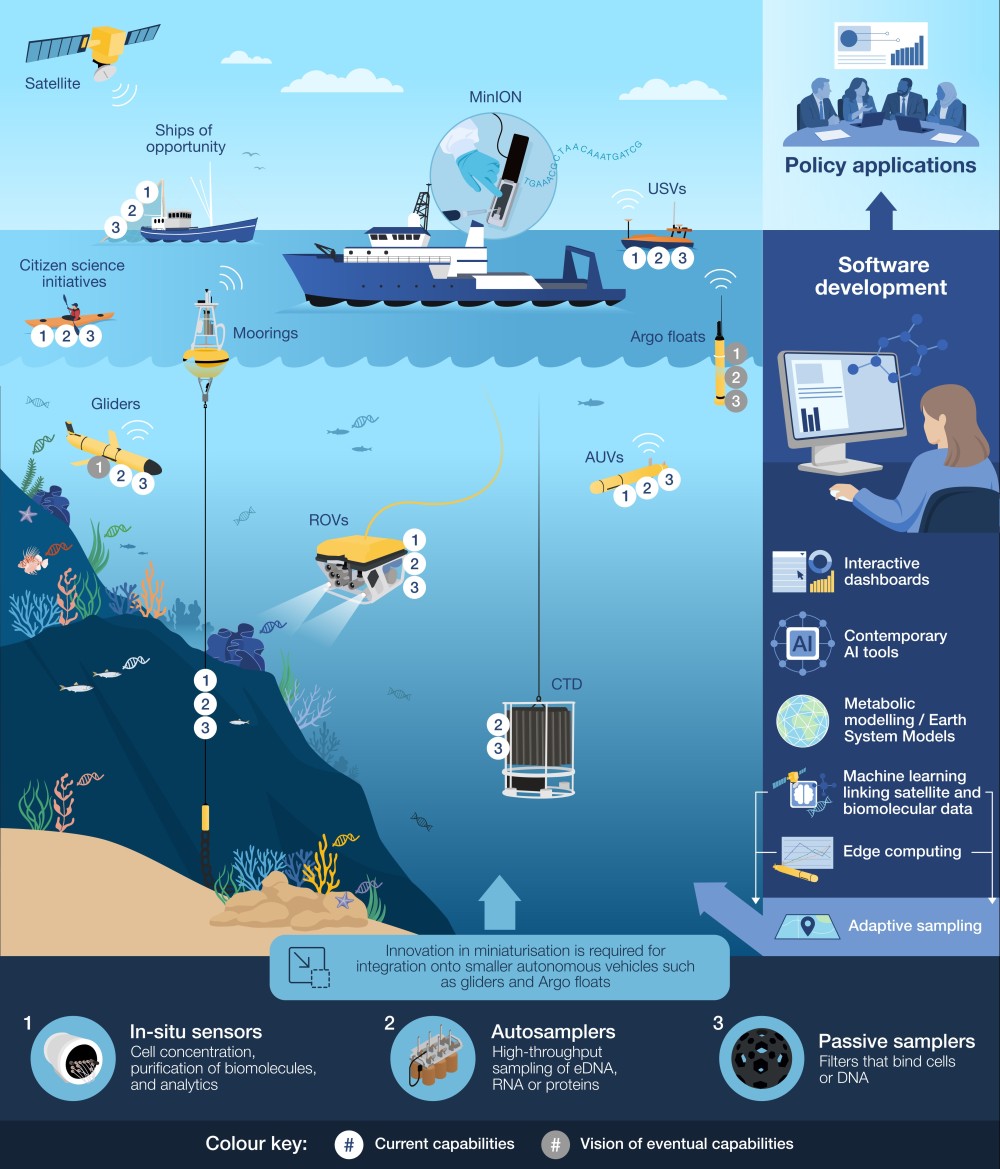
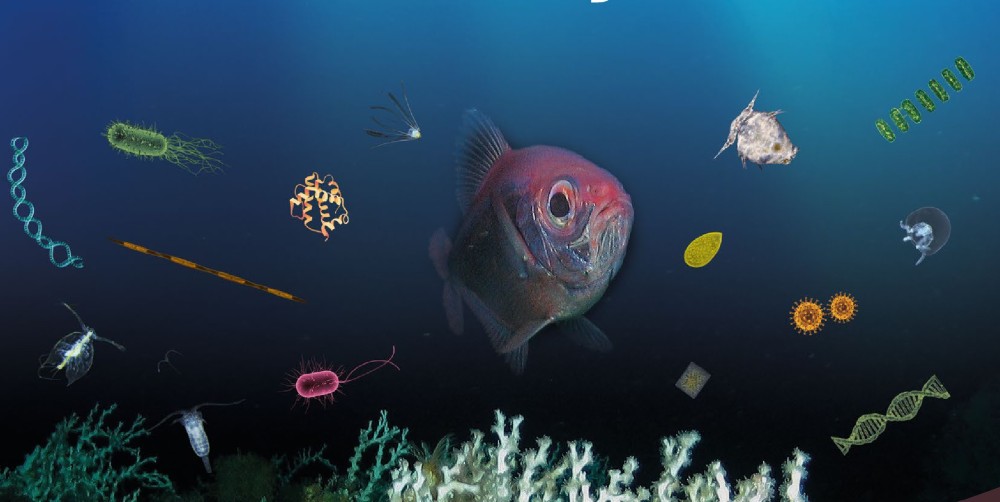
Overview of the vision for an automated -omics to knowledge pipeline. | Stacey McCormack, Visual Knowledge Pty Ltd.
From early detection to effective conservation management
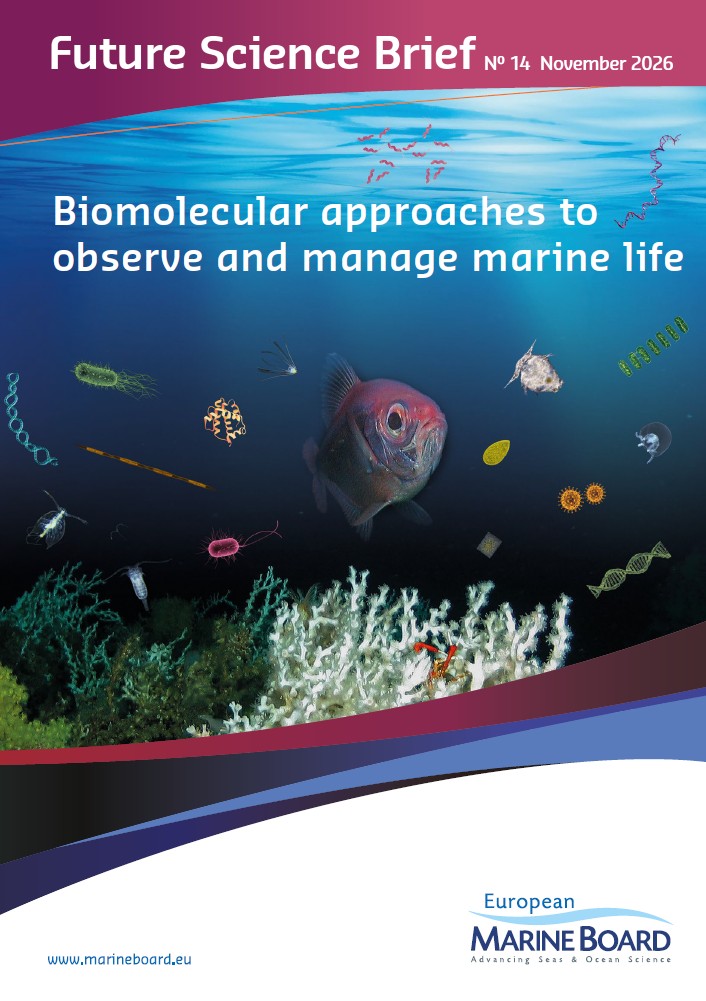
The new Future Science Brief No. 14, Biomolecular approaches to observe and manage marine life, explores how these techniques can contribute to more efficient, accurate and cost-effective monitoring of the marine environment.
The potential applications of biomolecular techniques are particularly diverse. They can help establish reliable biological baselines, monitor protected species and enable the early detection of pathogens, invasive alien species and harmful algal blooms. They can also help assess the impacts of climate change and human activities, delineate marine protected areas and shape nature restoration initiatives.
Biomolecular techniques can therefore make an important contribution to the implementation of international and European policy initiatives, including the BBNJ Agreement, the EU Marine Strategy Framework Directive, the Nature Restoration Regulation and the EU Biodiversity Strategy for 2030.
From scientific research to routine monitoring
To fully realise the potential of biomolecular techniques, their use needs to be scaled up from research applications to routine monitoring. The authors therefore call for investment in technological innovation, research infrastructure, standardisation and training.
Autonomous sampling devices, miniaturised equipment and biomolecular sensors that take measurements directly in the marine environment could enable biological data to be collected at more locations, at higher frequencies and with greater taxonomic resolution. Artificial intelligence can support the rapid identification of genetic sequences and the integration of molecular data with other environmental parameters. These data can, in turn, feed into climate models and digital twins of the ocean.
VLIZ is also ready to take further steps in this direction. “At VLIZ, we have the proven methods, the necessary expertise and infrastructure available to integrate eDNA observations on a larger scale into research projects that stand to benefit from molecular data. The challenge now is to join forces and make biomolecular observations an integral part of marine monitoring,” says Pascal Hablützel, researcher at VLIZ and co-author of the publication.
Investing in knowledge, technology and collaboration
Alongside technological innovation, fundamental scientific research remains essential. For example, much remains unknown about the function of many genes and the rate at which DNA degrades in the marine environment. Moreover, many marine organisms are still absent or underrepresented in molecular reference databases.
The authors also emphasise the importance of accessible and interoperable data infrastructure, standardised research protocols, quality control and responsible data management. International collaboration, knowledge exchange and training are essential to enable the wider application of biomolecular techniques worldwide.
The data collected can also serve as input for Digital Twins of the Ocean: digital representations that combine observations and models to improve our understanding of marine ecosystems and explore future changes. The recommendations thus also provide important scientific input for the European OceanEye initiative and the forthcoming European research and innovation strategy for ocean and water.
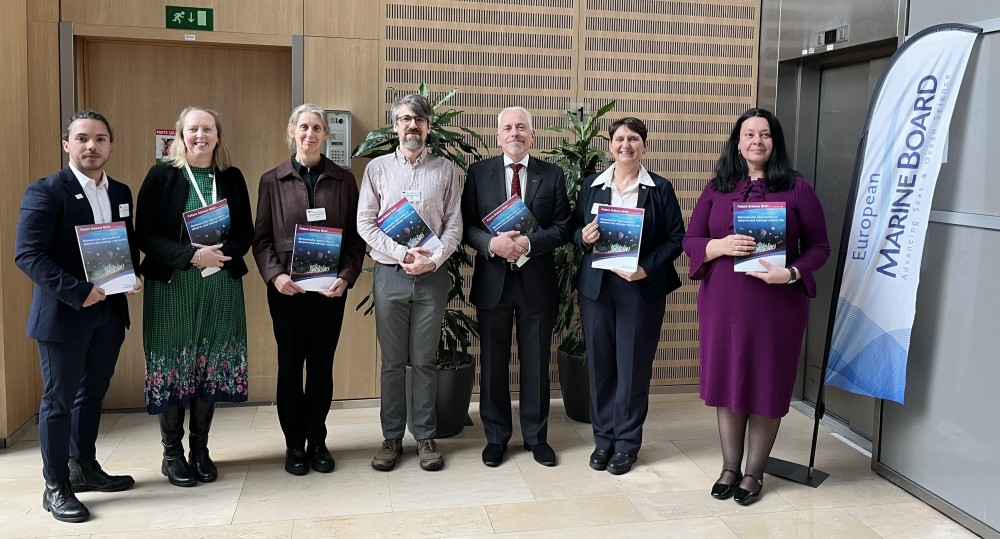
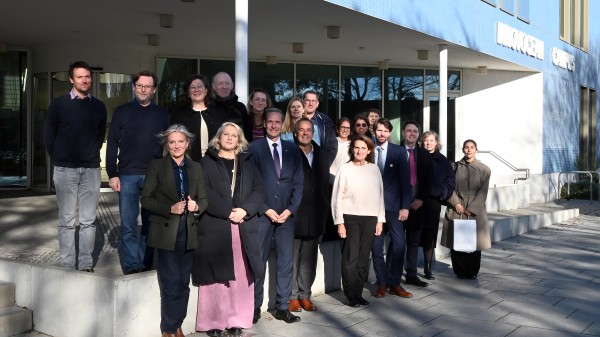
From left to right: Jorge Juan Santos Bruña (co-author), Fiona Grant (EMB), Louise Allcock (chair WG Biomolecular Approaches), Pascal Hablützel (co-author), James Morrison (DG RTD), Sheila Heymans (EMB) and Andreea Strachinescu (DG Mare)
Scientific recommendations for European ocean policy
The publication is the result of the work of an international working group comprising thirteen experts from eleven countries, led by Professor Louise Allcock (University of Galway, Ireland) and Professor Paloma Morán (University of Vigo, Spain). VLIZ researcher Pascal Hablützel was a member of this working group.
The Future Science Brief was launched on 18 November 2026 during an event jointly organised by the European Marine Board and the European Commission’s Directorate-General for Research and Innovation. With this publication, the European Marine Board calls for biomolecular observations to become a fully fledged pillar of ocean observation, thereby further strengthening the scientific foundations for sustainable ocean management.
The publication reflects the growing international interest in innovative methods for studying marine biodiversity, a topic that also took centre stage at the World Conference on Marine Biodiversity, held in Bruges from 17 to 20 November 2026.
> Read the full publication
> Download the factsheet
> Watch the recording of the launch event, featuring presentations by several members of the working group