In 2024, the Organisation for Economic Co-operation and Development (OECD) released a report titled "Understanding the Contribution of Flanders’ Public Marine Data to Society", in collaboration with organisations such as VLIZ. The report explores the societal benefits, both in Flanders and internationally, of marine data available through public databases in the region. It examines key findings from an OECD survey of global users of these data repositories and offers recommendations for policymakers looking to expand the availability of public marine data.
Key takeaways from the report include:
- Flanders is a leader and central hub for major national and international marine data repositories that are crucial to global data provision.
- These Flemish repositories are vital for the existence of complex value chains that significantly impact a wide range of global ocean-related economic activities.
- The provision of public marine data in Flanders can serve as a model for other coastal regions.
- There is still room for improvement in collecting user feedback and simplifying access to data.
The OECD chose Flanders as a case study for the importance of data repositories to society because of its investment in several repositories that curate, store, and make marine data available for public reuse. Flanders is also home to numerous international repositories that archive and provide global marine data for professional users (e.g., WoRMS, Marine Regions, LifeWatch EMODnet Biology, MIDAS). Other OECD member countries will now build on the insights from this Flemish case study.
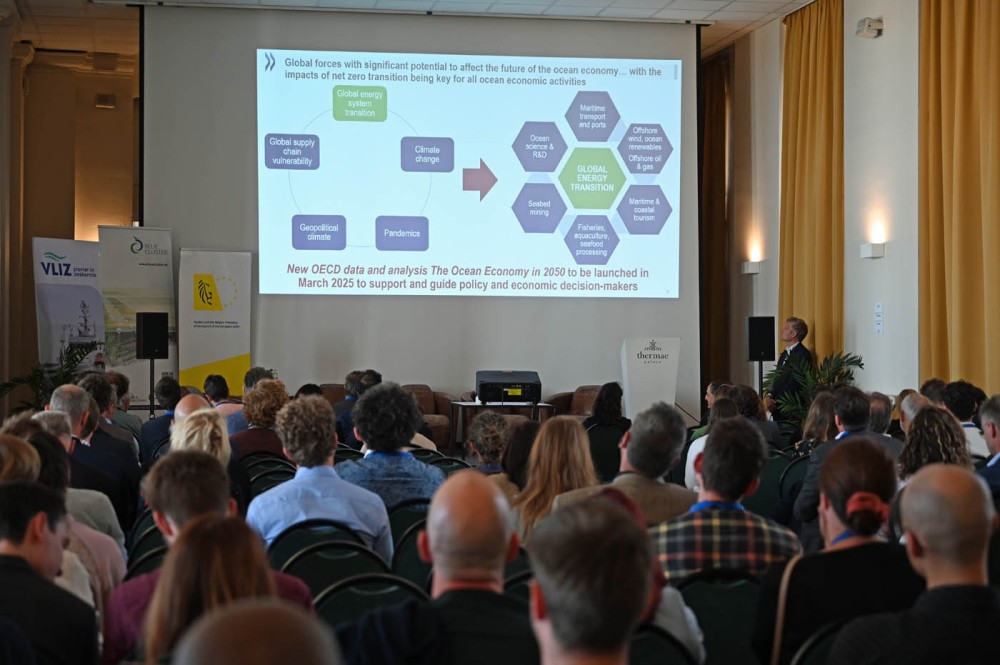
This report was created in collaboration with VLIZ, the Department of Work, Economy, Science, Innovation, and Social Economy (WEWIS), Flemish Hydrography (Maritime Service and Coast Agency, MDK), and De Blauwe Cluster vzw. The report was launched at the annual Blue Economy Science Summit (BESS), organised by VLIZ and De Blauwe Cluster on 23 May 2024.