The Flanders Marine Institute (VLIZ) leverages its policy-informing publications as an effective tool to translate research findings into actionable insights for marine and coastal policy issues. These publications also provide an overview of the various research topics VLIZ actively engages with. In 2024, VLIZ released several such documents, three of which are highlighted below:
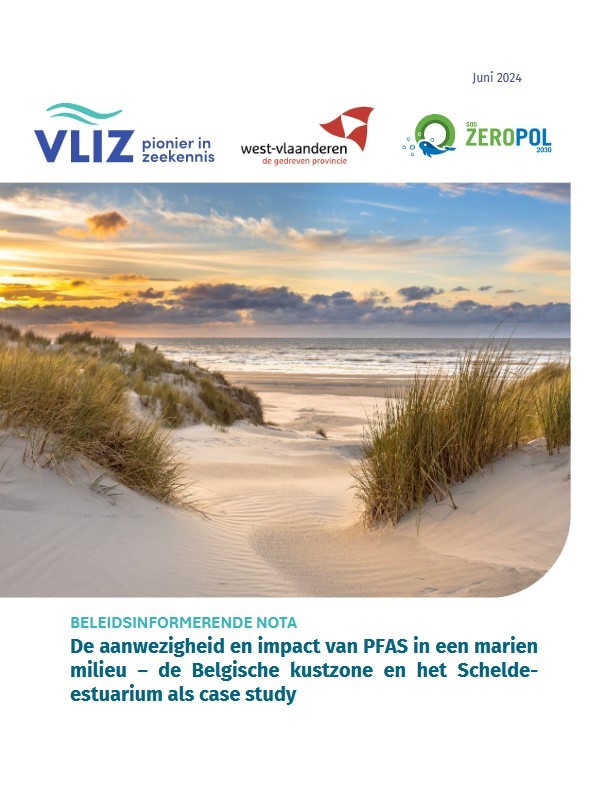
- Policy-Informing Brief (PIB) ‘Presence and Impact of PFAS in the Marine Environment – The Belgian Coastal Zone and Scheldt Estuary as a Case Study’. This PIB explores and synthesises the most current and reliable knowledge on the presence and impact of PFAS in marine environments. It specifically examines the Belgian coastal zone (including the Belgian section of the North Sea), using regionally relevant scientific sources wherever available. The publication was prepared at the request of the Province of West Flanders and supported by the Horizon Europe SOS-ZEROPOL 2030 project (2022–2026).
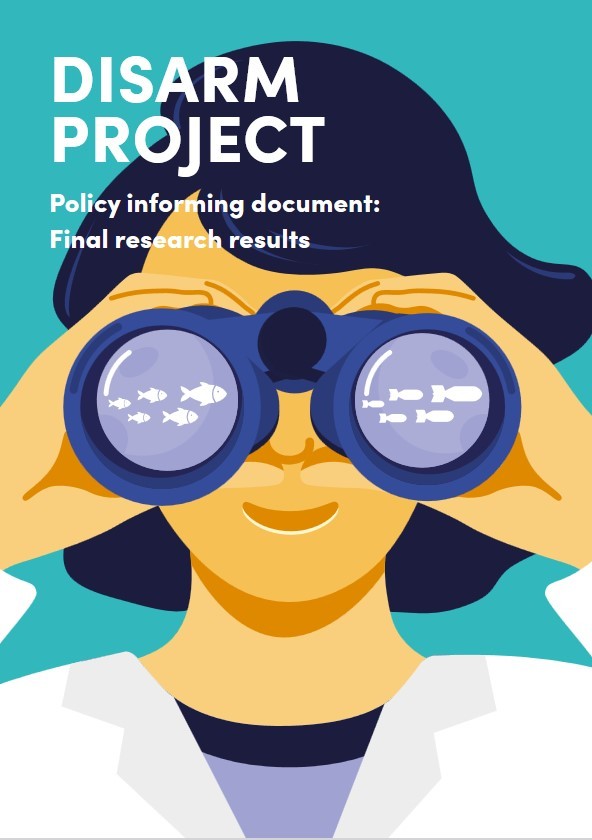
- The concise policy-informing document ‘DISARM Project Policy Information Document: Final Research Results’ summarises the scientific findings and resulting policy recommendations from the DISARM project, which studied the World War I munitions dump site at the Paardenmarkt, off the coast of Knokke-Heist. The project, funded by the Research Foundation – Flanders (FWO), aimed to characterise and assess the risks associated with the dump site.
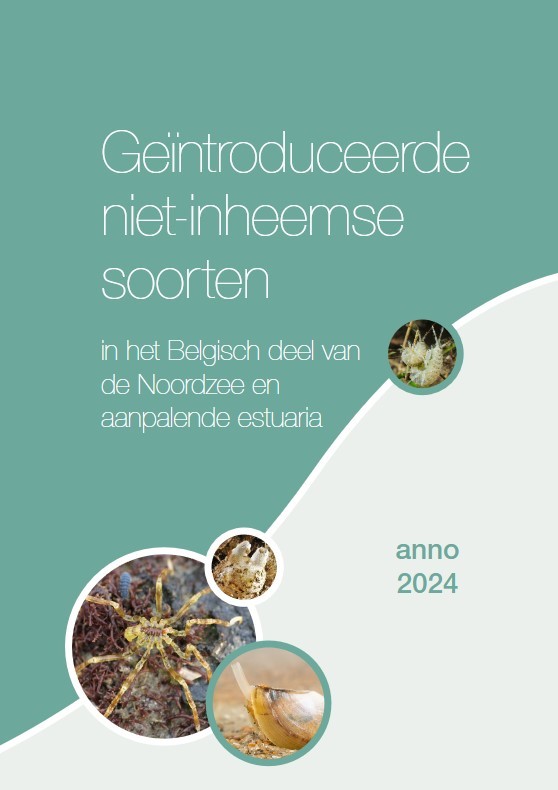
- The book ‘Introduced Non-Native Species in the Belgian Part of the North Sea and Adjacent Estuaries in 2024’ presents a comprehensive analysis of introduced non-native plant and animal species in the Belgian North Sea and the Scheldt Estuary. It builds upon previous reviews published in 2012 and 2020 (Vandepitte et al., 2012; Verleye et al., 2020) and was developed in collaboration with scientists from various national and international institutions under the coordination of the VLIZ Alien Species Consortium. The book provides policymakers with an updated overview of the challenges posed by non-native species and their impact on ecology, economy and human health.