On 30 May 2024, the Flanders Marine Institute (VLIZ) officially inaugurated its state-of-the-art science harbour, the uncrewed surface vehicle (USV) Gobelijn, and the high-speed workboat Abbé Mann. The ceremony, attended by Hilde Crevits, Deputy Prime Minister of the Flemish Government and Flemish Minister of Fisheries, marks a significant enhancement of VLIZ’s capacity for sea-based measurements. With the addition of the Tsuno glider, VLIZ now boasts an expanded fleet that complements its existing resources, including the Flemish research vessel RV Simon Stevin (commissioned in 2012), the RIB Zeekat, and four marine robots. This diverse fleet allows VLIZ and the broader marine research community to maintain and strengthen their leading role in research across the southern North Sea and beyond.
The USV Gobelijn, developed by Maritime Robotics (Norway), is among the first uncrewed surface vehicles of its kind globally. At 9 metres long, it functions as a small research vessel equipped with advanced scientific instruments and sensors. It features a unique system for deploying and retrieving other robotic devices. Operated remotely from a shore-based control centre, the Gobelijn can perform uninterrupted scientific measurements at sea for days or even weeks, minimising staffing needs and reducing its carbon footprint. Funded by the Brexit Adjustment Reserve (BAR), this groundbreaking platform is set to revolutionise marine observation, enabling deeper understanding of ocean systems and promoting sustainable development in the Blue Economy.
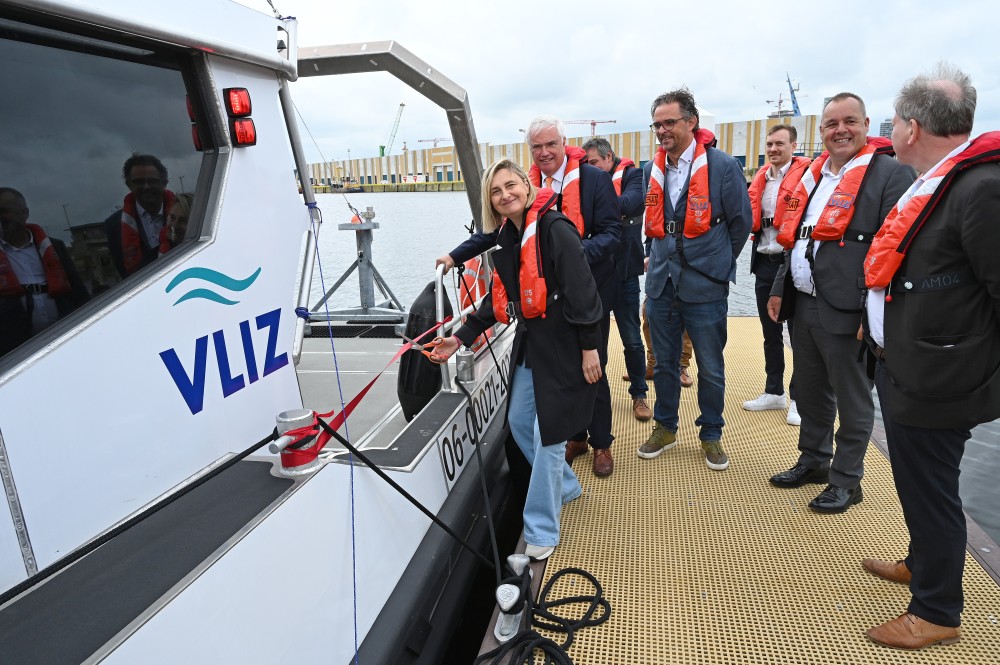
The Abbé Mann, a new workboat commissioned in 2024, adds flexibility to VLIZ operations within the Belgian part of the North Sea. Designed by Dutch company STORMER, this 11-metre vessel features a shallow draft of just 1 meter, speeds of up to 40 km/h, and an A-frame with a 500-kg lifting capacity. Its compact and multifunctional design is ideal for coastal operations, including diving, deploying marine robotics, seabed surveys, and research on coastal defence and plastic pollution. The Flemish Government supported the acquisition of this versatile boat, enhancing VLIZ’s ability to conduct cutting-edge research.
In 2024, VLIZ also acquired the glider Tsuno, a twin to glider Yoko. These torpedo-shaped autonomous vehicles, designed by French company Alseamar, adjust buoyancy to move vertically through the water column along pre-programmed paths. Capable of observing depths up to 1,000 metres for several weeks, these gliders excel in mapping large-scale ocean processes and studying the impacts of climate change.
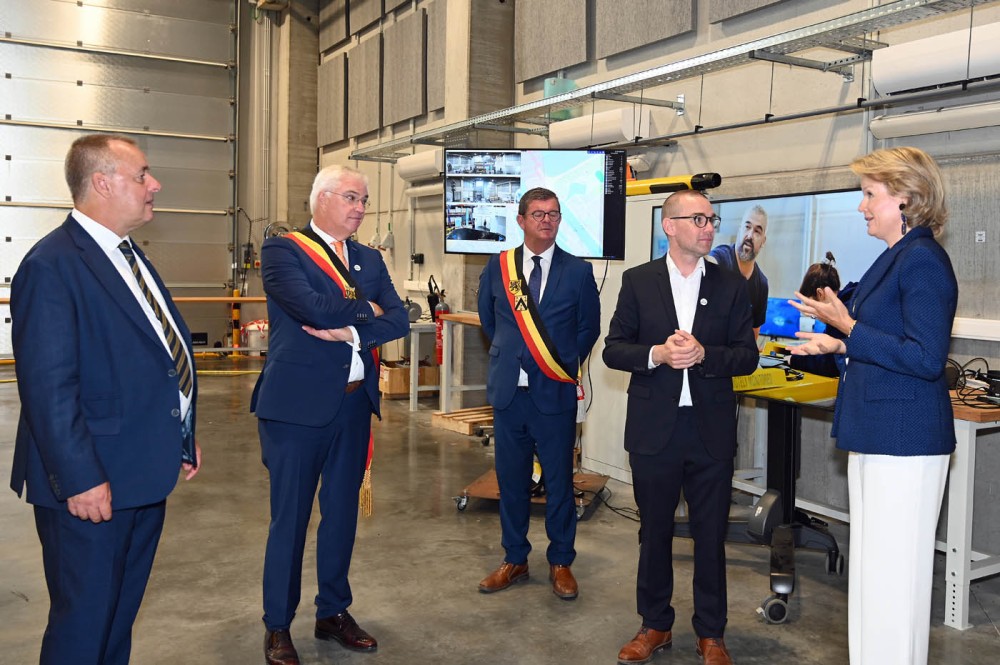
As a highlight of VLIZ’s achievements, Queen Mathilde of Belgium visited the renewed Marine Station Ostend (MSO) and the VLIZ fleet on 3 September 2024. The visit aligned with her role as a United Nations ambassador for the 2030 Agenda and its 17 Sustainable Development Goals (SDGs), addressing global challenges such as poverty, climate change, and inequality. During her visit, the Queen toured the laboratory facilities, explored the marine experience lab, and embarked on the RV Simon Stevin for a brief voyage featuring demonstrations of VLIZ’s innovative technologies, including the Abbé Mann and the USV Adhemar.