The ScheldeMonitor data and information portal has served as a hub for results and information from estuarine research in the Scheldt estuary for two decades. Managed and developed by VLIZ, the online platform makes raw data, associated publications, maps, and metadata available in a harmonized manner for researchers, policymakers, and other interested parties.
In 2004, VLIZ was mandated by the Technical Scheldt Commission (TSC) to establish this platform. This joint body of the Flemish and Dutch governments was responsible for coordination and collaboration on the sustainable and long-term management of the Scheldt and its functions. The successor to this body, the Flemish-Dutch Scheldt Commission (VNSC; established in 2008), continues to oversee the operation of the portal as the contracting authority.
The decision to establish a centralized data system stemmed from the growing realisation that greater coordination was needed between the existing research lines and monitoring activities in the Scheldt estuary. This was further strengthened by the establishment of the MONEOS monitoring network in 2008. This network, comprising various policy and research institutions from Flanders and the Netherlands, is the largest provider of raw data for ScheldeMonitor. The VLIZ Marine Data Centre (VMDC) is responsible for periodic data collection from network partners, either through automated data acquisition procedures or manually.
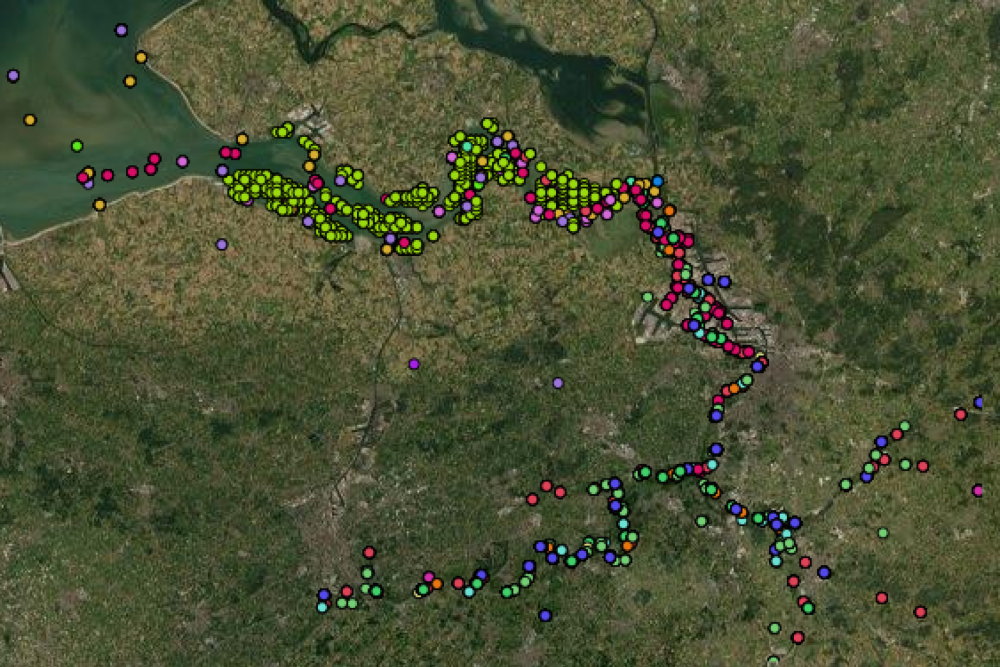
Initially, VLIZ focused on creating a harmonised database capable of containing and publishing various data types from different providers. This database supplies raw data for periodic reports and research papers within the Research & Monitoring Working Group of the VNSC. These reports inform policymakers about the functioning of the estuary and the effects of certain interventions.
Over time, VLIZ received approval from the VNSC to expand the ScheldeMonitor system further. At the data level, the number of data sources significantly increased, including the integration of data from the Sigma Plan into the ScheldeMonitor database. At the website level, new tools and applications were introduced to make it easier to explore raw data and provide accompanying information (maps, documents, etc.) on a single platform.
As a result, the platform today is not only a source of raw data for experts and their reports but also a central catalogue where a broad audience can find a range of materials related to the Scheldt estuary. A core goal is to ensure FAIR (Findable, Accessible, Interoperable, and Reusable) and open information.
In the future, VLIZ and the commissioning bodies aim to further increase the reproducibility of research results through automated scripts and documented methodologies, both publicly available via ScheldeMonitor. This will eventually lead to reports and research results that can be generated with a proverbial 'push of a button'. This will allow researchers from various Flemish and Dutch institutions to create new insights based on a uniform information source.