The International Oceanographic Data and Information Exchange (IODE) is a subsidiary body of the Intergovernmental Oceanographic Commission of UNESCO (IOC-UNESCO). The IODE project office is hosted at, and supported by, VLIZ. The project office facilitates the exchange of oceanographic data and information between the 154 Member States of IOC, participating national data centres (which includes VLIZ), other providers of data such as the Global Ocean Observing System, and users of data around the world. It also coordinates more than 460 training courses globally. The IODE Project Office is part of the IOC secretariat, which has its headquarters in Paris.
During 2025, the IODE project office has advanced activities across its three key areas of work: the Ocean Data Information System (ODIS), the Ocean Biodiversity Information System (OBIS), and the Ocean Teacher Global Academy (OTGA). The project office also continues to provide other international resources including Ocean Expert – an online global directory for Member States of marine and freshwater professionals, institutions, event information and organizations; the Ocean Best Practices System (OBPS) - aimed at improving and standardising practices for collecting, analysing and sharing ocean data and information; as well as capacity development and the Global Ocean Science Report (GOSR). Ann-Katrien Lescrauwaet is a member of the IOC Group of Experts on Capacity Development and Jan Mees is chair of the GOSR editorial board.
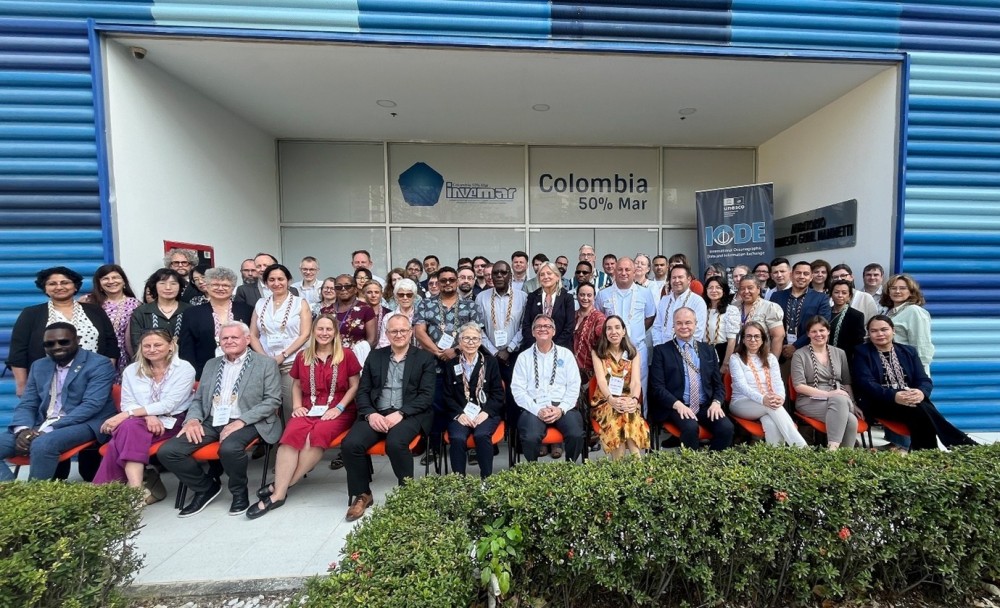
In 2025, the OTGA delivered 57 courses offering 1703 hours of training opportunities in 4 languages to more than 5,160 learners from over 142 countries, including capacity development for early career ocean professionals and blue skills. Collaborations with VLIZ experts led to courses on Ocean Data Management, Biological Data Management, Contributing and Publishing Data into EMODnet, the EU Blue Cloud 2026 Virtual Laboratories, and the Erasmus Maris course from sampling and analysis of microplastics to data.
OBIS published 31 million new species observation records, totalling 167 million records from 7,003 data sets. Joint work between OBIS and VLIZ contributed 1,139 datasets and 54 million records; vocabulary standardisation and taxonomic quality control of OBIS species names with the VLIZ WoRMS team; and linking biodiversity data to the EU Digital Twin Ocean and strengthening molecular workflows. OBIS staff joined the VLIZ biological modelling team and the VLIZ library added 154 OBIS-cited papers.
Furthermore, VLIZ contributed to the expansion and support of the ODIS Catalogue of Sources (ODISCat) providing long-term opportunities to foster collaboration between marine scientists, policymakers and educators.