From 9 to 13 June, more than 14,000 participants – including 75 heads of state and government – from 175 countries gathered in Nice, in the south of France, for the third UN Ocean Conference (#UNOC3). They shared one goal: to secure the future of our ocean. Flanders and VLIZ were present with a strong delegation, bringing a wealth of expertise in marine science, innovation and coastal policy. On the first day of the Ocean Conference, Belgium officially ratified the landmark BBNJ agreement (Biodiversity Beyond National Jurisdiction). This new “ocean treaty” protects biodiversity on the high seas – beyond national borders – and marks a major step forward for international ocean governance.
VLIZ General Director Jan Mees took part in the Belgian side event, ‘The Importance of a Well-Working Clearing-House Mechanism for BBNJ’. He highlighted the importance of open, usable marine data as a driver of international cooperation. The Clearing-House Mechanism, a crucial and complex component of the BBNJ treaty, must develop into the digital nervous system of global ocean policy. Not merely a database, but a system that connects countries, knowledge and communities in the spirit of transparency, fairness and action.
VLIZ Director of International Relations, Ann-Katrien Lescrauwaet, in turn shared her insights on the role of regions and regional actors in implementing integrated solutions for a healthy ocean, during the Regions4 side event ‘Ocean Solutions at Scale: Empowering Subnational Action for Restoring the Health of Marine Ecosystems’. She also discussed the societal importance of sharing ocean data during the panel session organised by the Decade Coordination Office on Ocean Data Sharing, drawing on a practical example from the Sea Level Station Monitoring Facility platform that VLIZ is developing and managing for IOC/UNESCO.
Leen Vandepitte served as a panelist at the event ‘Shaping the Future of Marine Biodiversity Monitoring’. She presented the global database of the World Register of Marine Species (WoRMS) as a taxonomic reference. The event highlighted the importance of monitoring marine biodiversity, essential for implementing policies aimed at safeguarding a healthy and productive ocean.
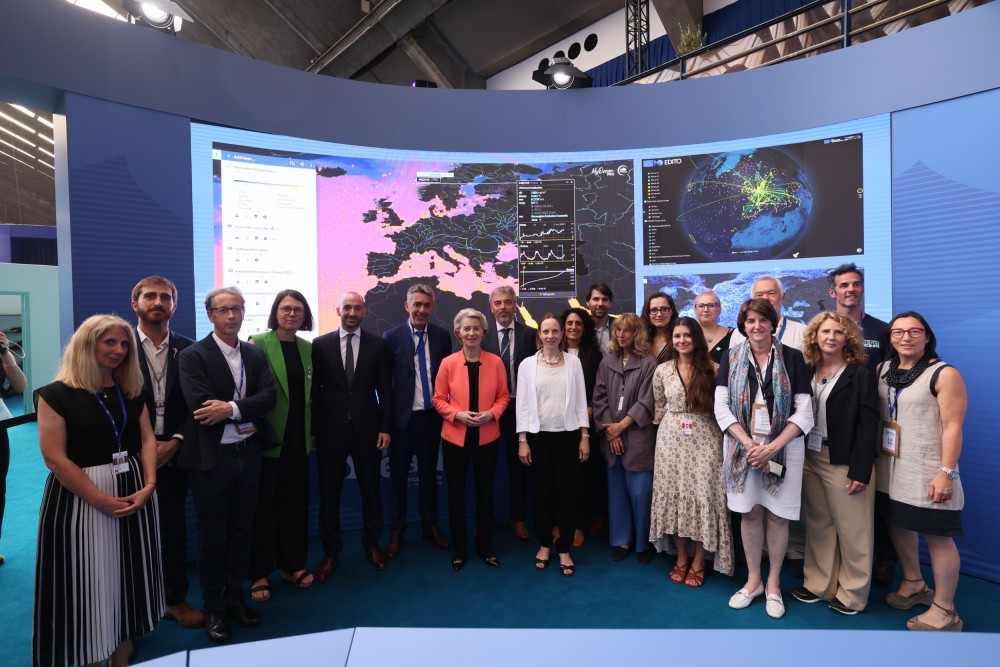
Cyrielle Delvenne presented the Blue-Cloud 2026 project as an open-science platform for collaborative marine research, linking it to the EU’s Digital Twin of the Ocean (EDITO). Finally, Juana Jimenez advocated for a model of international cooperation from Flanders during the panel ‘One Ocean, Seven Voices for Seven Continents: Collective Youth Action for SDG 14’. The event, organised by the Quebec SOI Foundation, highlighted the leadership and contributions of young people and Early Career Ocean Professionals (ECOPs) by sharing their regional perspectives.
Ahead of UNOC3, the One Ocean Science Congress (OOSC) took place from 3 to 6 June. The aim of the conference was to provide heads of state, governments and wider society with comprehensive scientific insights into the health of the ocean and the way forward. VLIZ was also strongly represented at this scientific meeting. As an outcome of the congress, the marine scientific community is supporting the “Science for Action” manifesto. The organisers and the International Scientific Committee of the One Ocean Science Congress are inviting participants to endorse the manifesto.