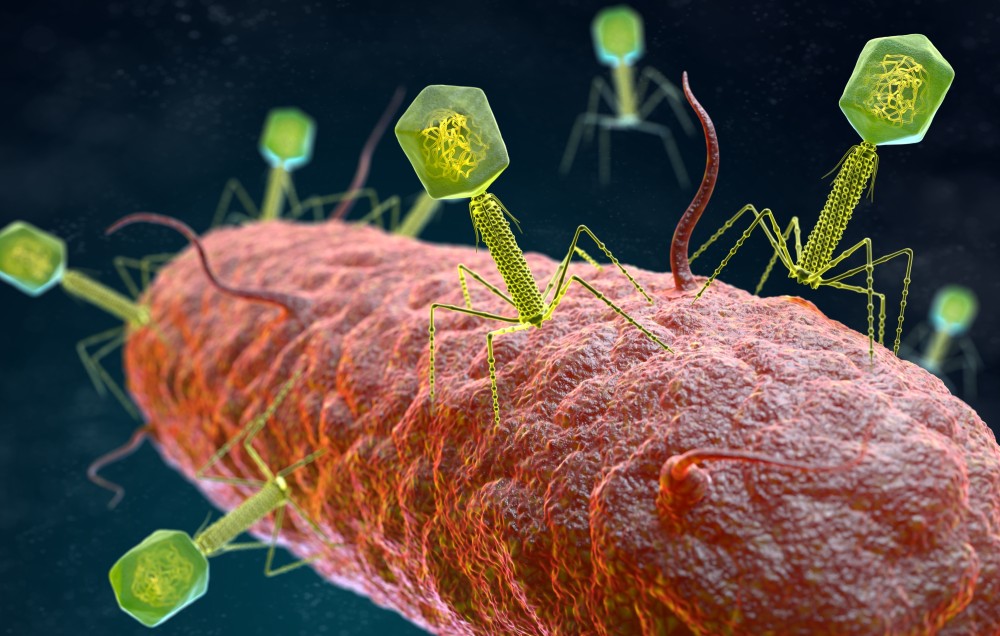
Tiny, but they pack a big punch! With a total of 10³¹ particles, viruses form the most
abundant biological entities in the ocean. By selectively lysing their cellular hosts, viruses
release dissolved organic matter, redirecting the flow of energy and nutrients away from
higher trophic levels and toward microbial recycling, directly influencing biogeochemical
fluxes within an ecosystem. Some viruses can enter a lysogenic state, where they integrate
their genomes into the host chromosome and replicate passively during host cell division
without killing the host. Hisham Shaikh (VLIZ & Ghent University) successfully defended his doctoral research on Friday 13 February 2026 on viruses and their role in the biogeochemistry of the North Sea.
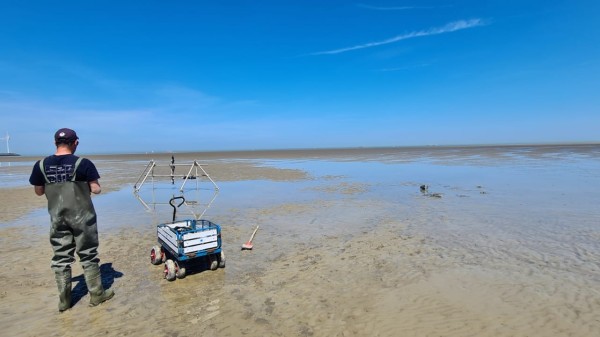
Most of our understanding of aquatic viral ecological processes comes from open-ocean studies, while viral processes remain less explored in dynamic coastal regions and shallow continental seas. The North Sea, characterized by its shallow depths, varying bathymetry, contrasting inputs of riverine and Atlantic waters, strong tidal forcing, and heavy anthropogenic pressure, represents an understudied ecosystem for unravelling how viruses regulate coastal biogeochemistry.
This is the theme of the PhD that Hisham Shaikh obtained on Friday 13 February 2026 at VLIZ in Ostend, from Ghent University. His supervisors were prof. Anne Willems (Ghent University), dr Maarten De Rijcke (VLIZ) and prof. Corina Brussaard (NIOZ). The work of Hisham Shaikh demonstrates that viruses are abundant, dynamic and functionally important components of the North Sea ecosystem. He applied methodological refinements to viral production analyses that improved estimates of lytic production and inducible lysogeny. That revealed substantial viral-mediated prokaryotic mortality, significant carbon release and pronounced spatial heterogeneity across the basin.
Metagenomic analyses further showed a diverse DNA virome dominated by bacteriophages associated with heterotrophic bacteria, alongside seasonally structured ssDNA and giant virus communities. Metatranscriptomic analyses revealed a highly dynamic and transcriptionally active RNA virosphere, with strong seasonal signals among phytoplankton-, fungal-, and invertebrate-associated viruses.
Overall, these findings show that viruses influence microbial population dynamics and organic matter processing across multiple trophic levels, highlighting their central role in shaping microbial community structure and biogeochemical cycling in the temperate North Sea.
In addition to the aforementioned promotors and supervisors, the doctoral reading committee included other representatives from various knowledge institutions: Prof. Dries Bonte (Ghent University), Prof. Jan Mees (VLIZ), Prof. Xavier Saelens (Ghent University), Prof. Jelle Matthijnssens (KU Leuven) and Dr Adam Monier (University of Exeter).
Reference: Shaikh, H.M. (2026). Uncovering the diversity & ecology of viruses in the North Sea. VLIZ PhD Theses, 12. PhD Thesis. Ghent University: Belgium. 180 pp. [VLIZ-bib]